
In Memory of Baylie Grogan and Baylie’s Wish Foundation
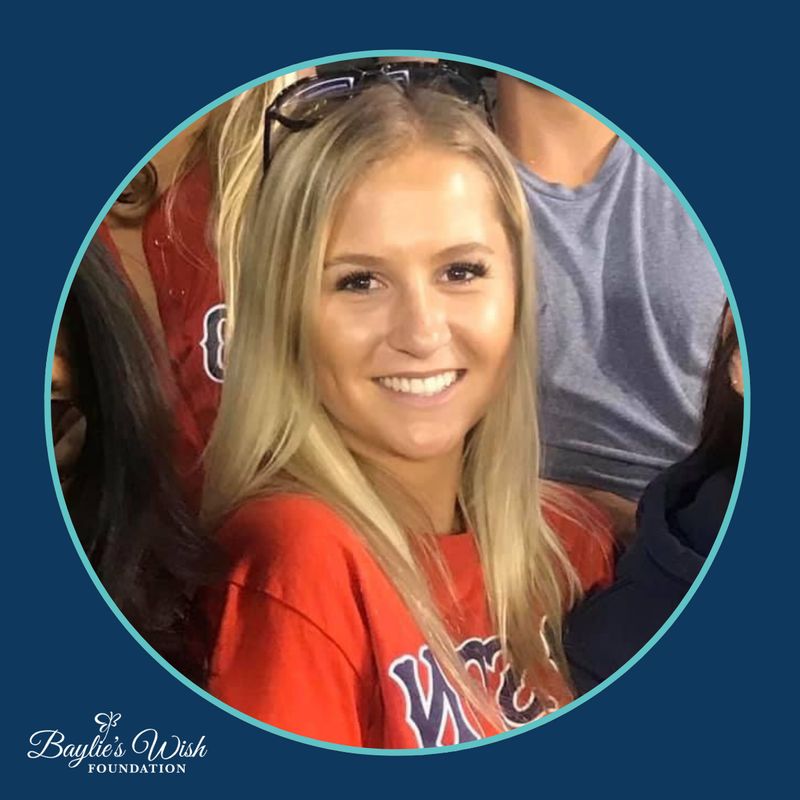
At 3rd-i, our mission is clear: no student should feel alone, vulnerable, or unsupported, especially during something as routine as getting a ride home. That’s why we’re honored to announce a powerful partnership with Baylie’s Wish Foundation, a nonprofit founded in memory of Baylie Grogan, a bright, compassionate, and driven University of Miami student whose story is a heartbreaking reminder of how quickly a night out can take a tragic turn.
Baylie’s Story: The Reality of Being “Too Responsible to Be at Risk”
Baylie Grogan was everything we hope our daughters, sisters, and friends will be: smart, kind, driven, and responsible. Nicknamed “the mother hen,” she was the one making sure everyone else got home safely. She worked full-time as a lifeguard, waitressed weekends, and took extra summer credits to transition from microbiology to neuroscience, all while maintaining strong ties with her family and sorority sisters at the University of Miami.
But during the first weekend back to school in 2018, Baylie let her guard down, just once.
Two men claiming to be med students offered her a ride. Trusting them, Baylie canceled her Uber. Quickly, she realized it was all a lie. They drove her in circles, refusing to give their real names. She began texting her friends:
“I’m with some random bros… they’re sketchy.”
At one point, they stopped at an apartment. One man came back with a suspicious cup of water and tried to pressure her to drink it. Baylie texted her roommate:
“They are trying to get me to drink the water, too much.”
She spilled it, which upset the men and the driver who stopped the car. One went into a club and came back with another water. By then, Baylie was gone.
What Happened Next
Disoriented, Baylie called her friends.
“Something’s wrong… you need to come get me.”
“Call an Uber,” they said.
“I don’t know how,” Baylie replied.
It was 3 a.m. It was pouring rain. Her friends were three miles away, uncertain of what to do. They had no emergency ride backup, no live location or stream to monitor, and no clear understanding of when it was appropriate to call 911. They told her to walk home.
Shortly after, Baylie was struck by a car.
She spent six weeks in the ICU before succumbing to her injuries.
Baylie’s Wish Foundation: Turning Tragedy into Action
Baylie’s mother, Shawnee Baker, co-founded Baylie’s Wish Foundation to shine a light on the hidden dangers of college life and the gaps that leave even the most prepared students vulnerable. The foundation educates families and students about real risks like impaired decision-making, legal gray areas, and what happens when there’s no one there to say, “stay put.”
They also raise awareness about broader issues like the Clery Act, medical privacy laws like HIPAA, and the absence of policies like Power of Attorney and amnesty laws that could have changed Baylie’s outcome.
“If it could happen to Baylie,” Shawnee says, “it could happen to anyone.”
What Happened, on the Record
Baylie Grogan was 19 and in her sophomore year at the University of Miami when she was struck by a car in Miami on August 19, 2018. Police believed foul play was involved and that she had been drugged. She died on September 27, 2018, after roughly six weeks in hospital, most of it in a vegetative state. Those facts were reported by WCTV in August 2025 and described by her mother in a 2025 WBUR Here & Now interview.
What happened during those six weeks is the reason the foundation exists in the shape it does. Baylie was over 18. There was no health care surrogate on file, no HIPAA authorization and no power of attorney. Her parents, standing in the hospital, had no automatic authority to make decisions for her.
“Because your child is incapacitated and over the age of 18, you would need to go in front of a judge and ask for guardianship,” Shawnee Baker told WCTV.
She told WBUR the same thing in plainer terms: “If we wanted guardianship of our adult daughter, we would have to go to court for it,” and “It would take a couple of months to get guardianship.” In the meantime the decisions sat with the hospital.
The Four Documents the Foundation Tells Families to Sign
This is the part of Baylie’s story that most retellings skip, and it is the part a family can act on in an afternoon. Baylie’s Wish Foundation describes its mission as “preventing legal challenges for families facing medical dilemmas and finding safe solutions for preventable tragedies, that occur year after year, at colleges and universities.” In practice that starts with four pieces of paper.
| Document | What it does | Why it mattered here |
|---|---|---|
| Health care surrogate or proxy | Names an adult who can make medical decisions if the student cannot speak for themselves | Without one, the decisions defaulted to the hospital and the family’s only route to authority was a court hearing |
| HIPAA authorization | Lets named people receive the student’s medical information | An adult patient is their own personal representative under 45 CFR 164.502(g), so a parent is not entitled to the record by default |
| Durable power of attorney | Authorizes someone to handle financial and legal matters | Tuition, insurance, housing and bills do not pause during a hospitalization |
| FERPA release | Lets the school share education records with a parent | Rights transfer to the student on enrolling at a postsecondary institution under 34 CFR 99.5 |
Form names and requirements vary by state, and the foundation points families to their own school and to an attorney for the specific paperwork. The point is the timing: all four are routine to sign in August and impossible to sign in an emergency room. The same logic applies to the emergency contact list on a student’s phone, which is worth setting up in the same sitting.
What the Foundation Is Building
Beyond the documents, Baylie’s Wish Foundation runs and advocates for:
-
Baylie’s Law, legislation that would require colleges to provide those medical and legal forms to students at admission rather than leaving families to discover the gap the hard way
-
The Keep Me Safe Campaign, safety training that covers drink spiking, sexual assault, safe dating, signs of emotional abuse, sextortion and sex trafficking
-
A petition for a mandatory comprehensive safety education program for every incoming college student
-
Expansion of the Clery Act, support for the Corey Safety Act, extension of Duty of Care and Duty to Warn, an amnesty law that covers the victim as well as the first mistake, and illicit drug testing legislation
WCTV, reporting on the family in August 2025, noted that the foundation also promotes safety tools including the 3rd-i app. That is the second half of the work, and it is where this partnership sits.
Why Baylie’s Wish Is Partnering with 3rd-i
At 3rd-i, we believe no one should face danger alone. Our app allows users to stream and record live video, audio, and location to trusted friends, family, or dispatchers, providing situational awareness and a support network when it matters most. Our goal is to help people stay safer, more connected, and better prepared and ultimately save lives. We have already had multiple incidents in Miami in which our app has been used to do just this.
“Baylie’s story never leaves you,” says Dillon Abend, founder of 3rd-i and fellow University of Miami student. “What happened to her could happen to any student. This partnership is about providing tools and knowledge that didn’t exist the night Baylie needed them.”
What We’re Building, Together
Through this partnership, Baylie’s Wish Foundation and 3rd-i will work to:
-
Launch nationwide awareness campaigns on the risks of unsafe rideshare encounters
-
Develop educational programming on safety strategies, decision-making, and knowing your options
-
Host campus outreach events to equip students with practical, real-world tools
-
Advocate for better campus transparency, safety tech access, and emergency support systems
We’re not just telling students to “be safe”. We’re giving them a way to stay seen, heard, and supported.
3rd-i builds these partnerships into the product itself. The WhatsMyName Foundation partnership shaped the same shared trips and streamed rides, and our comparison of college student safety app options covers what students actually have to choose from today.
A Legacy That Demands Action
Baylie Grogan’s story is not just heartbreaking. It is a call to action. A reminder that tragedy doesn’t discriminate based on responsibility, GPA, or good intentions.
“As a mother, I would give anything to rewrite Baylie’s story,” said Shawnee Baker, Executive Director
and Co-Founder of Baylie’s Wish Foundation. “But I can’t. What I can do is fight every day to make sure
no other student finds themselves alone, afraid, and without resources. Partnering with 3rd-i brings us
one step closer to a future where students are safer, more informed, and better prepared.”
Learn more: 🔗 3rd-i.com
For Baylie. For the ones who look out for others. For the next student walking home in the rain. Let’s help them stay safe.
Frequently asked questions
- What is Baylie’s Wish Foundation?
- Baylie’s Wish Foundation is a 501(c)(3) nonprofit co founded by Shawnee Baker after the death of her daughter, Baylie Grogan, a 19 year old University of Miami student. It works on college safety education and on the medical and legal documents a family needs once a student turns 18.
- Who was Baylie Grogan?
- Baylie Grogan was a 19 year old neuroscience and pre med student at the University of Miami, a member of Zeta Tau Alpha and the college equestrian team. She was struck by a car in Miami on August 19, 2018 and died on September 27, 2018.
- What happened to Baylie Grogan?
- Baylie Grogan accepted a ride from two men who claimed to be medical students and canceled the Uber she had booked. Police believed she had been drugged. Disoriented, on foot and about three miles from her friends at 3 a.m., she was struck by a car and died six weeks later.
- What is Baylie’s Law?
- Baylie’s Law is the legislation Baylie’s Wish Foundation advocates for. It would require colleges to provide incoming students with the medical and legal forms at admission, so a health care surrogate and a HIPAA release exist before anyone needs one.
- What documents should a college student sign before leaving for school?
- Baylie’s Wish Foundation tells families to complete four before move in: a health care surrogate or proxy, a HIPAA authorization, a durable power of attorney and a FERPA release. A student who turns 18 becomes their own decision maker, so a parent holds no automatic authority without them.
- How can I support Baylie’s Wish Foundation?
- Baylie’s Wish Foundation publishes its programs, its petition and its donation options at baylieswish.org. It also asks families to complete the four documents themselves and to ask their own college to add health care surrogate information to parent orientation.
- Why did Baylie’s Wish Foundation partner with 3rd-i?
- The gap the night Baylie needed help was that nobody watching could see what was happening or judge when to call 911. The partnership pairs the foundation’s education work with a live streaming safety app, and covers awareness campaigns, educational programming and campus outreach.