
Delivery Driver Safety Tips: 8 Practices for 2026
Most delivery incidents follow a pattern, and the pattern usually starts in a gap rather than at an intersection. Think about your last late drop-off: an unfamiliar street, the phone face-down on the passenger seat so it doesn’t slide, one earbud in, and nobody who knows exactly where you are or when you were supposed to be done.
If something had gone wrong on that stairwell, the response would have started with you solving a logistics problem while under stress, which is the worst possible moment for it.
The numbers say that gap is everywhere. The OSHA 2024 injury-and-illness summary recorded 1,478,310 cases from 392,735 establishments, with roughly 26% of incidents in transportation and warehousing. Couriers and express delivery services made up 32% of that sector’s reported cases, and more than 75% of cases among couriers and messengers, truck drivers and related transportation occupations involved days away from work or job transfer and restriction, against 66% across all reported incidents.
Eight practices close most of that gap, and they work best as a routine rather than a list. Three run before you turn the key, four run during the shift, and one runs at the end of a hard night. Each one below includes the trade-off, because the honest version of delivery driver safety tips always costs something: minutes, battery, or a slightly annoyed customer.
Table of Contents
- 1. Share Live Location With Trusted Contacts During Deliveries
- 2. Use Scheduled Check-Ins and One-Tap Status Replies
- 3. Keep Emergency Access One Tap Away
- 4. Record Customer Interactions and Doorstep Encounters
- 5. Verify Addresses and Customers Before Entering Unfamiliar Spaces
- 6. Plan Safer Routes and Avoid Isolated Areas at Night
- 7. Minimize Cash Handling and Secure Vehicle Valuables
- 8. Manage Fatigue and Driving Hours to Stay Alert
- Delivery Driver Safety Practices at a Glance
- Build the Habit Before You Need It
1. Share Live Location With Trusted Contacts During Deliveries
A driver finishing a late delivery may be stopped longer than expected at an unfamiliar address. If a trusted contact can see the route, they have context to act when the trip stops following the plan.
The GAO’s analysis of transportation and warehousing injury data found the sector had the highest serious injury and illness rate among 19 sectors in 2022, at approximately 3.8 cases per 100 workers. General warehousing and last-mile delivery accounted for an estimated 60% of the sector’s 220,400 serious injuries. A shared route can help a contact spot an unexpected stop and follow up promptly.
Make the Sharing Useful, Not Just Switched On
Set up sharing before the first stop. Choose one contact who will be awake and reachable, and agree what should prompt them to call: for example, a stop that runs longer than planned or a marker that moves away from the route. Keep the phone charged so sharing stays active through the shift.
For a driver on a 9 p.m. route in an unfamiliar neighborhood, a marker that stays at one address longer than expected gives the agreed contact a reason to check in. If the driver cannot confirm they are safe, the contact can follow the escalation plan rather than wait for another update.
Location sharing uses battery, and some drivers may feel uncomfortable sharing every stop. Agree on who can see the route and when sharing starts and ends. A live location sharing app can show the route and drop-off in one view, without requiring a phone conversation at each stop.
2. Use Scheduled Check-Ins and One-Tap Status Replies
At 10:40 p.m., a courier taps “At next stop.” The 11:00 prompt gets no reply. A scheduled check-in gives the dispatcher a clear next step instead of leaving them to guess whether the driver is busy, delayed, or in trouble.
Set prompts around the work: after a difficult delivery, at a planned break, or when a route reaches a designated point. Keep replies simple, such as “On schedule,” “Delayed,” or “Need help.” Drivers should respond only when safely stopped.
Write the escalation rule before the shift. One missed check-in triggers a text. Two consecutive missed check-ins trigger a phone call within five minutes. If there is still no answer, contact the named emergency contact. If they cannot reach the driver and there is a credible safety concern, contact local emergency services and provide the last known location. Keep contact names and numbers easy for the dispatcher to find.
For example, if the 11:00 and 11:20 prompts go unanswered, the supervisor calls at 11:25 under this rule. The procedure should also say who owns each step and how the dispatcher records the outcome.
A check-in safety app with one-tap replies can reduce the effort of responding, but the tool does not replace a clear escalation procedure. Set the schedule before the first stop, confirm who is monitoring, and tell drivers what will happen if they miss a prompt.
3. Keep Emergency Access One Tap Away
A driver who slips on an unlit step may have only one hand free and little time to search a phone. Set up emergency access before the shift so help is quick to reach when a situation turns urgent.
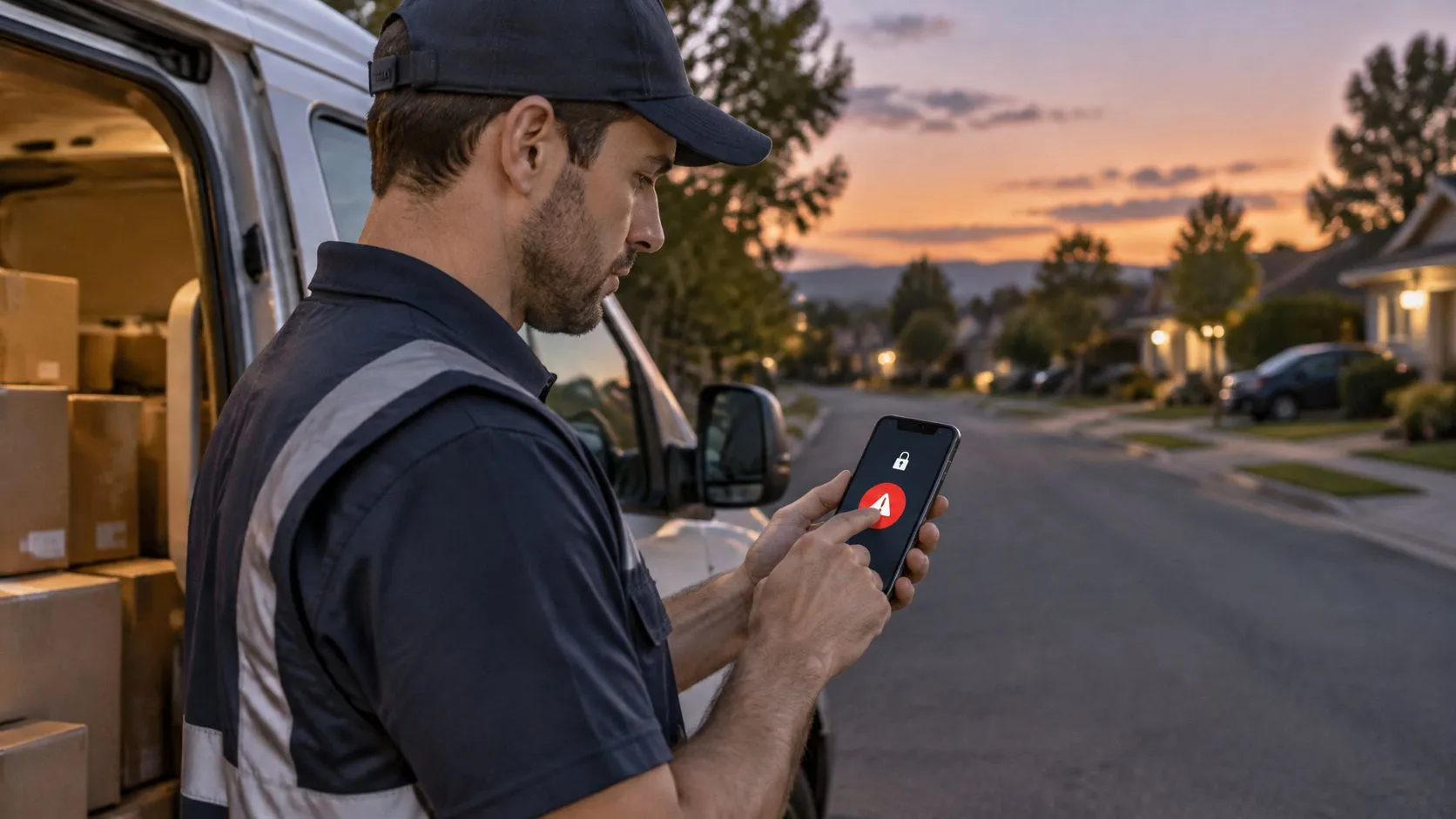
Emergency access should be simple to use under pressure. Keep the phone’s emergency call function accessible from the lock screen, and place any safety app shortcut where it is easy to reach. A short, clear answer from a frightened caller helps responders act faster. The guide to locksmith call intake offers a related example of structured call handling.
Set It Up Once and Test It in Daylight
- Practise the sequence. Rehearse it until you can reach the alert without searching through menus.
- Check sound settings. Confirm whether alerts can be heard when the phone is on silent or Do Not Disturb.
- Review location access. Allow the safety app to use location when needed, so an alert can include where you are.
- Set up emergency SOS. Review your phone’s emergency SOS settings and know how to call 911 directly.
- Use the right escalation. Call 911 first when someone is in immediate danger. App-based help is a supplement, not a replacement for emergency services.
A shortcut that is too easy to trigger can create false alarms. Put it somewhere reachable but not likely to be pressed by accident, then practise the sequence before each shift if the device or settings change. For a less urgent concern, use the app’s available safety support; for an immediate threat or serious injury, call 911.
4. Record Customer Interactions and Doorstep Encounters
Abuse at the door belongs in the safety plan, not just in the incident report written afterwards. In a 2025 survey of more than 300 UK retail home-delivery drivers, 77% reported abuse during the previous year, 13% reported assault, and 26% had refused a delivery because they feared for their personal safety, as Talking Retail reported on the survey.
Memory is a poor witness after a confrontation. Within an hour, the exact words blur, and a complaint turns into one person’s account against another’s. A recording changes the shape of that argument.
Build the Evidence While the Delivery Happens
Recording from a front and a rear camera captures both the person at the door and the surroundings behind you, which matters when the question is who approached whom. Automatic transcription removes the need to rewatch footage to find the thirty seconds that count.
- Tell customers where appropriate. A simple “this delivery is being recorded” defuses more arguments than it starts.
- Check local recording and consent law first. Audio rules vary by state and country, so confirm before you enable sound.
- Set a retention window. Ninety days is a common working default. Long enough for a complaint to surface, short enough to be defensible.
- Log access. Know who can pull footage, because a recording used loosely creates its own liability.
Say a customer becomes verbally abusive at a handoff and later disputes what was said. A transcribed clip settles the question in half a minute and keeps the driver out of a he-said-she-said review.
The trade-off is trust. Some customers dislike being filmed, and a driver who films everything can come across as confrontational. Record the approach and the handoff, not the inside of anyone’s home, and let recordings support the written incident report rather than replace it. Write the report the same night, while the sequence is still fresh, and attach the clip.
5. Verify Addresses and Customers Before Entering Unfamiliar Spaces
Most doorstep risk is decided before anyone knocks. The building, the entry point, and the name on the order tell you more than the customer’s tone ever will.
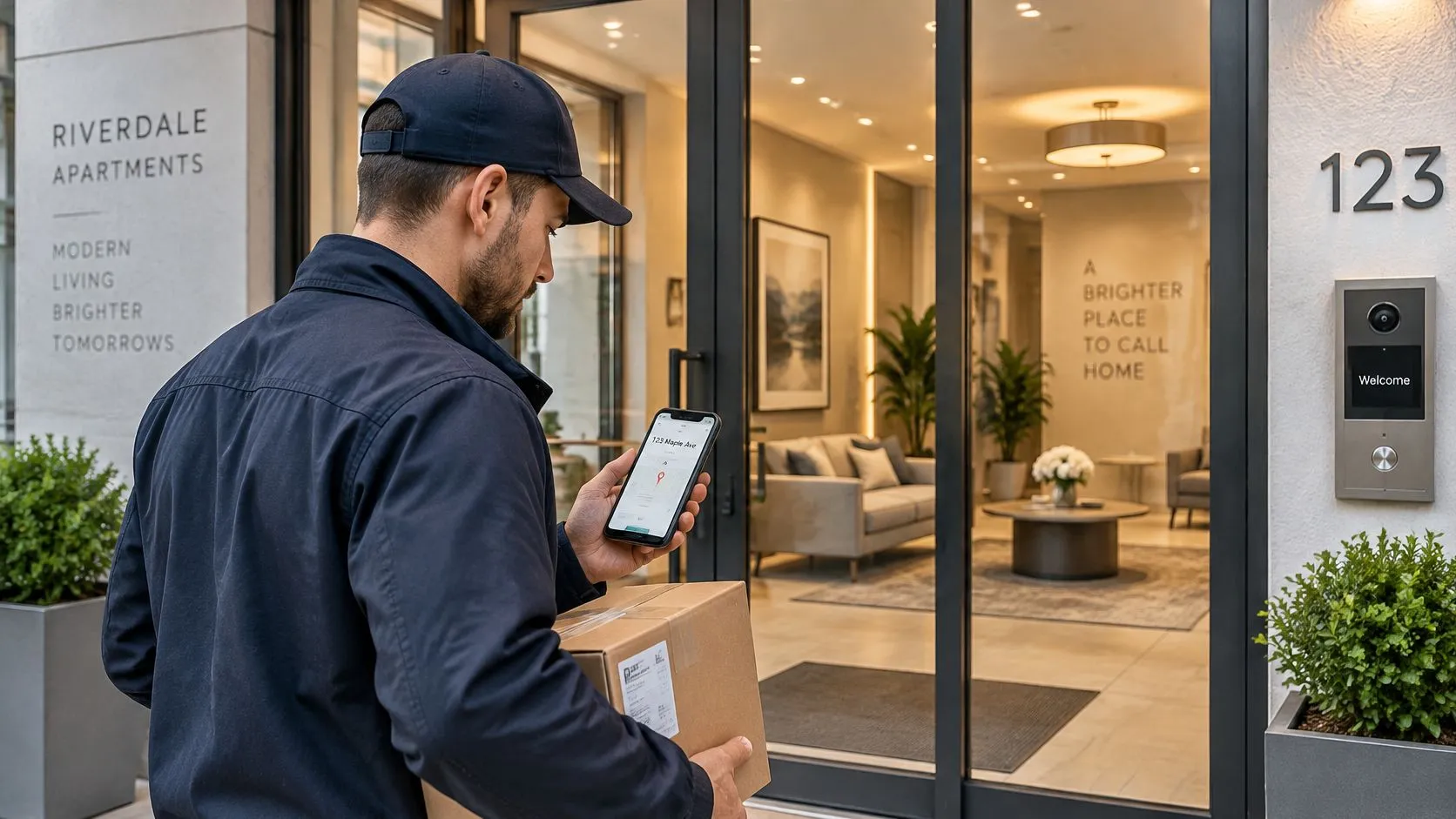
A mismatch between the order name and the person who answers isn’t proof of anything. It is a reason to stay on the public side of the doorway and finish the job from there. The same applies to a “come around the back” instruction at night, a gate code that arrives from a different number, or a request to bring the parcel inside and up to the third floor.
Keep the Handoff on Public Ground
- Log the entrance before you go in. For multi-unit buildings, note the door, the floor, and the stairwell you used, so a responder can be directed without guesswork.
- Use a reception policy. Where the customer can’t be verified, leave the order with a front desk, a concierge, or a neighbour and photograph it in place.
- Describe your location in words you’d use on a call. “Building C, second floor, north stairwell” beats “I’m inside somewhere.”
- Give yourself permission to stop. A refused handoff is an operations problem, not a safety failure.
You don’t owe anyone an entrance. Leaving the parcel at reception is a complete delivery, and no rating is worth a stairwell you can’t get out of.
Say a driver reaches a block of flats and the name on the buzzer doesn’t match the order, while the voice on the intercom insists on handing it over in person inside. The driver leaves it with the ground-floor shop, photographs it, and marks the order delivered with a note. Dispatch handles the complaint the next morning. Nobody walks into a corridor they can’t read.
The trade-off is friction and time. Some customers will be annoyed, and a few will mark the delivery down. Build the policy at the company level so the decision isn’t resting on a tired driver at midnight.
6. Plan Safer Routes and Avoid Isolated Areas at Night
Route planning gets treated as an efficiency exercise. It’s a safety decision with a fuel bill attached.
The traffic environment is unforgiving. NHTSA’s large-truck crash data recorded 5,472 people killed and 153,452 people injured in crashes involving large trucks in 2023, and those totals include truck occupants, occupants of other vehicles and pedestrians, so they describe the severity of the environment rather than any one driver’s odds. Across all motor-vehicle crashes that year, NHTSA recorded 37,654 fatal crashes and approximately 2.4 million people injured. The route you choose decides how much of that environment you’re exposed to after dark.
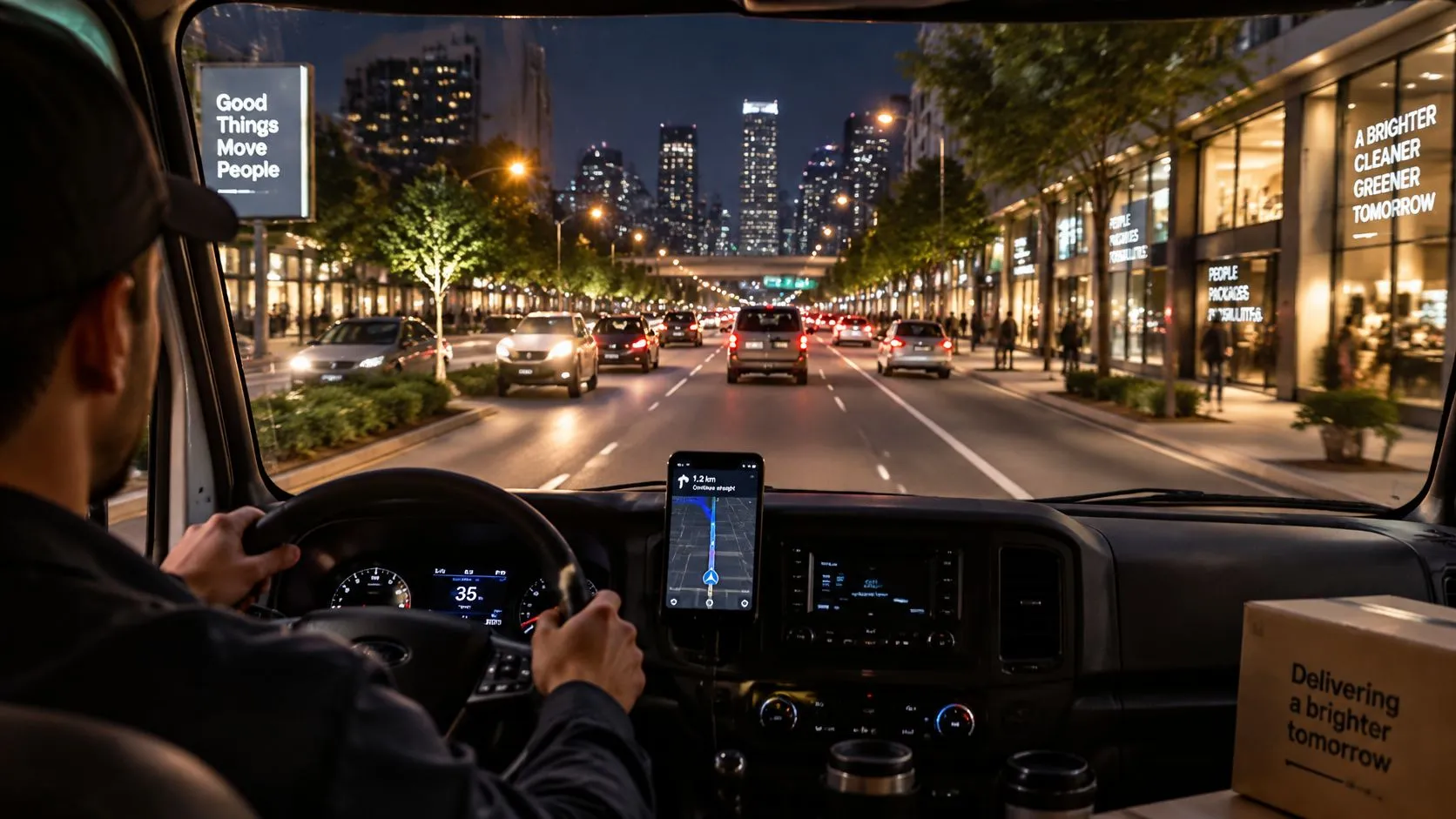
Choose the Route You’d Want at 11 p.m.
A route with good lighting, steady traffic and quick access to a main road is a route where help arrives. An unlit industrial park with one entrance and no passing cars is a route where a stalled van becomes an event.
- Set the plan before the shift. Decide the primary and the alternate while you’re still in the depot, not at a closed junction.
- Name your break points. Fuel stations, busy supermarkets and 24-hour depots make safe places to stop, eat and check the phone.
- Keep the doors locked and the engine off at stops. A locked cab with the keys in your pocket removes the easiest opportunity of the night.
- Feed incidents back into the map. When two drivers report the same corner, that corner comes off the standard route.
Say a night crew notices repeated incidents at the rear access of an estate with no lighting. They move the standard stop to the front barrier, add two minutes per drop, and the reports stop.
The trade-off is time. The lit route with the busier junction can add minutes across a shift, and dispatch will feel it on tight delivery windows. I’d rather absorb that on the schedule than explain a preventable incident later.
7. Minimize Cash Handling and Secure Vehicle Valuables
Cash in the cab changes the arithmetic of a robbery. A driver carrying a float, a phone mount and a visible bag is a target with a known reward, and the confrontation needed to take it happens at a doorway where nobody else is standing.
Remove the Reward, Then Remove the Opportunity
- Cap the float. Set a maximum cash limit per driver and empty any surplus at a secure location mid-shift.
- Move to prepaid where you can. Contactless and prepaid orders take the cash out of the equation entirely.
- Keep valuables out of sight before you park. A bag in the footwell gets seen through the glass at the stop before the one where it matters.
- Carry the keys on your person. Not on a lanyard, not in the door pocket, not in the ignition while you’re at a door.
Locking the van for a thirty-second drop-off feels excessive until the first time someone doesn’t have to break a window to take a bag off the seat.
Say a route runs through a district where two drivers have been approached at the same corner in a month. The supervisor drops the cash float to nothing on that route, switches the stops to prepaid, and moves the parking to the lit side of the junction. None of that costs much, and all of it lowers the odds of a confrontation.
The trade-off is speed and habit. Locking the vehicle at every stop adds seconds, and carrying the keys in a zipped pocket is slower than leaving them in the cup holder. Treat the seconds as insurance and build the habit until it’s automatic. Report every theft attempt, even the ones that end with nothing taken, because the pattern is what gets a route changed.
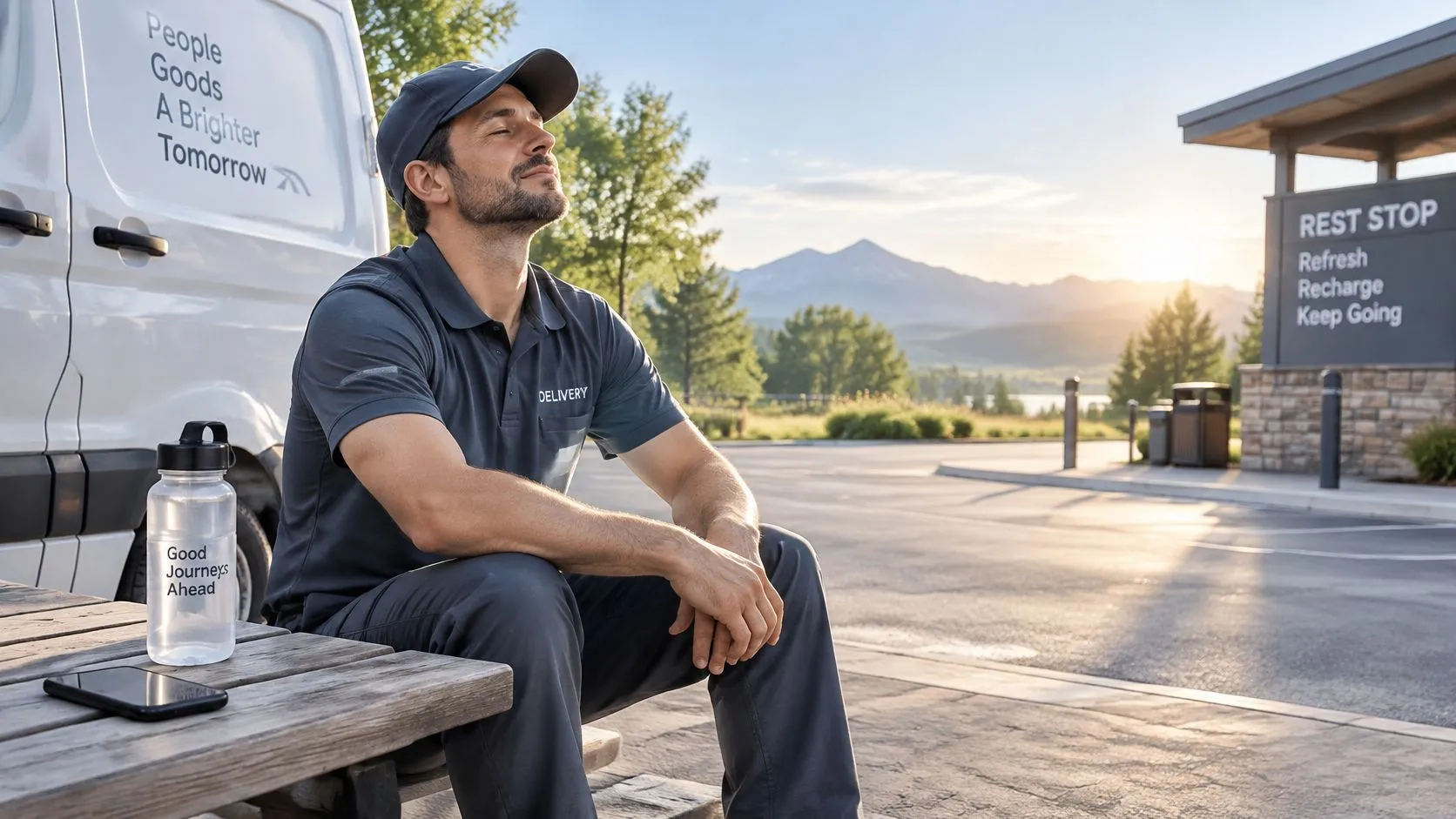
8. Manage Fatigue and Driving Hours to Stay Alert
A driver has been waiting between orders, then accepts one more delivery near the end of a long shift. Unpaid waiting can add to fatigue, even when the vehicle is parked. Research on gig work has also linked financial pressure with faster driving, making it harder to treat rest as optional.
Set the Limits Before the Shift Starts
- Set a break rhythm. Stop every couple of hours, get out of the vehicle, and walk briefly. A break helps only if it happens before concentration drops.
- Stop when drowsiness appears. Pull over somewhere safe rather than trying to push through. A short nap may help more than another coffee; Lendrum’s Driving School drowsiness advice explains why willpower is not a reliable fix.
- Tell dispatch when you stop. That keeps a planned rest from being mistaken for a missed check-in. If you cannot resume safely, tell dispatch and ask them to reassign the remaining orders.
- Review the schedule after the shift. If fatigue reports keep appearing on the same late shift, adjust the workload or timing rather than expecting drivers to absorb the risk.
A driver who notices drifting on a motorway exit should pull into a safe, well-lit stopping place and contact dispatch before continuing. The remaining orders can be reassigned; a delivery deadline is not a reason to drive while drowsy.
Breaks can reduce earnings on a per-delivery shift, so the pressure is real. Set the break expectation in advance and make sure dispatch has a clear process for covering orders when a driver is too tired to continue.
Delivery Driver Safety Practices at a Glance
| Item | Shift Phase | Core Habit | Main Risk Addressed |
|---|---|---|---|
| Share Live Location With Trusted Contacts During Deliveries | During shift | Share your live route with trusted contacts | Delayed response when a driver is isolated or in trouble |
| Use Scheduled Check-Ins and One-Tap Status Replies | During shift | Send brief, regular status updates | Missed signs of trouble and distracted driving |
| Keep Emergency Access One Tap Away | Before and during shift | Keep SOS controls easy to reach | Delayed access to emergency help |
| Record Customer Interactions and Doorstep Encounters | During deliveries | Document interactions and encounters | Disputes, threats, or unsupported complaints |
| Verify Addresses and Customers Before Entering Unfamiliar Spaces | Before entry | Confirm details and choose a safe drop-off point | Unsafe or unauthorized entry |
| Plan Safer Routes and Avoid Isolated Areas at Night | Before and during shift | Choose well-lit, busy routes and safe stops | Exposure to isolated or poorly lit areas |
| Minimize Cash Handling and Secure Vehicle Valuables | During stops | Limit cash and lock away valuables | Theft, robbery, or confrontation |
| Manage Fatigue and Driving Hours to Stay Alert | Throughout shift | Take breaks and limit continuous driving | Drowsy driving and reduced alertness |
Build the Habit Before You Need It
A safety plan earns its keep on the night something goes wrong, and by then it’s too late to build one. Routes planned, check-ins agreed, emergency access tested, one person watching the route. That’s the whole system, and it costs about ten minutes at the start of a shift.
3rd-i supports exactly that routine for lone and late-shift workers. Live video, audio and location stream to your chosen squad or a trained Safety Agent, with one-tap SOS, 911 escalation through RapidSOS, and automatic recordings with transcriptions for documentation. A Safety Agent is one tap away and can be viewing your live stream in about 3 to 5 seconds from your phone. Company and campus plans are built for night shifts, lone working and late trips.
Two limits are worth stating plainly. Employers can’t start trips for workers or track them between trips, so the choice to share stays with the person doing the work. And no app replaces calling 911 directly in an immediate emergency.
Pick two of the eight practices above and put them in place before your next shift. Live location and a check-in rule are the pair I’d start with, because they cover the largest gap for the least effort. Add the rest one at a time, and write down what happens when a check-in is missed while everyone is calm enough to think.
3rd-i builds a personal safety app for people who work and travel alone, and the delivery shift is one of the clearest cases for it: live video, audio and location streamed to your squad or a trained Safety Agent, with one-tap SOS and 911 escalation when something goes wrong at a door you shouldn’t have knocked on. If you want the check-in and live-location pieces running before your next shift, visit 3rd-i and see how the plans map to the way you work.